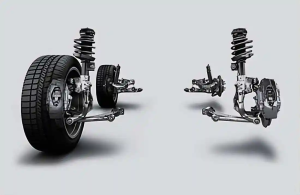
If your car’s suspension were a Broadway show, shocks and struts would be the lead dancers—controlling bounce, supporting handling, and keeping you from feeling every road imperfection.
Shocks vs. Struts—What’s the Difference?
- Shocks are standalone dampers that smooth out bumps.
- Struts combine a shock with a structural component of the suspension, often including the coil spring.
Functionally, both control the up-and-down motion so your tires stay glued to the road.
Signs of Worn Suspension
- Bouncy Ride: You hit a bump and feel like you’re on a trampoline.
- Nose-Dive Braking: Your front end dips dramatically when you hit the brakes.
- Uneven Tire Wear: Bouncing tires wear unevenly, shortening their lifespan.
Replacement Intervals
Expect shocks and struts to last 50,000–100,000 miles, depending on road conditions. If you regularly navigate pothole-ridden streets, budget for earlier replacement.
Upgrading for Performance
Performance-tuned shocks (think Bilstein or KYB) can sharpen handling if you enjoy spirited driving. On the daily-driver front, OEM-style replacements from reputable brands keep comfort and safety balanced without breaking the bank.
Installation Insights
Replacing shocks/struts can be a two-person job—springs hold tension and can be dangerous if mishandled. Unless you’ve got the right tools (spring compressors, torque wrench) and experience, trust a professional.