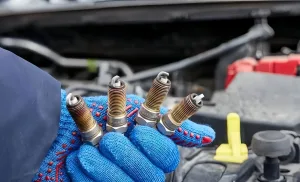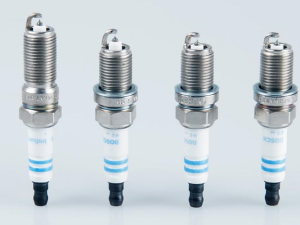
When you turn the key, spark plugs deliver high-voltage jolts to ignite the compressed air/fuel mixture in each cylinder. That tiny spark starts the controlled explosion that drives your pistons and sends you down the road. Worn or fouled plugs can’t generate a consistent spark, causing incomplete combustion, power loss, and rough engine operation.
Spotting the “My Plugs Need Help” Signals
A dead-simple symptom: rough idling. If your car feels like it’s doing the cha-cha at a stoplight, suspect spark plugs. Engine misfires—where you feel a sudden jolt or “hiccup” during acceleration—also point to plug trouble. Keep an eye on your fuel economy, too: misfires dump unburned gas out the tailpipe, slashing mileage by up to 30% if left unchecked. And of course, the dreaded Check Engine Light with codes P0300–P0312 almost always flags spark-plug woes.
Copper vs. Platinum vs. Iridium: The Spark Plug Showdown
Copper plugs are the old-school MVP—great conductivity and low cost—but they only last about 30,000 miles on average. Platinum plugs bump that lifespan to 60,000–80,000 miles, thanks to a tougher electrode. Iridium plugs sit at the top, boasting up to 100,000 miles of service because iridium is six times harder than platinum and can handle extreme heat. The catch? Iridium plugs retail at about double the price of platinum, so weigh cost versus convenience.
When to Swap ‘Em Out
Manufacturer guidance varies—some recommend a 100K-mile interval, while others suggest 30K-mile swaps for copper plugs. A practical rule of thumb:
- Copper: every 30,000 miles
- Platinum: every 60,000 miles
- Iridium: every 100,000 miles
Always double-check your owner’s manual or the stamped interval on the plug box—you don’t want to be that person stalled in the turning lane.
DIY Spark-Plug Swap: Easy or Explosive?
Changing spark plugs is one of the most satisfying DIY jobs—right up there with installing a subwoofer. Here’s the lowdown:
- Safety first: Park on a flat surface, let the engine cool, and disconnect the negative battery terminal.
- Label your ignition cables or coil packs so you don’t mix up cylinders.
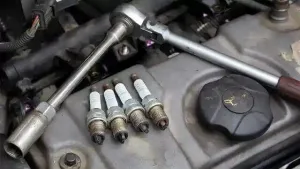
- Remove the old plugs with a spark-plug socket—turn gently to avoid snapping a plug off in the head.
- Check plug gaps: Manufacturers often pre-gap modern plugs, but if yours aren’t, set the gap per your manual (usually 0.028–0.060″).
- Apply a dab of anti-seize to the threads (if recommended) and install the new plugs to the torque spec—about 13 lb-ft for most.
- Reattach coils or wires, reconnect the battery, and start ‘er up.
Per Reddit’s AskCarGuys, you don’t need a torque wrench if you’re gentle—seat until snug, then turn an extra ¼–½ turn. But real car nerds recommend a torque wrench for perfect seal and to avoid over-tightening.
Final Spark-Plug Wisdom
A little spark-plug love keeps your engine happy, your MPG up to snuff, and your drive smoother than a latte on a Sunday morning. Whether you go copper for savings, platinum for balance, or iridium for the long haul, regular inspection and timely swaps mean fewer stalls and more smiles. Now grab that socket set and give your engine the jolt it deserves!