
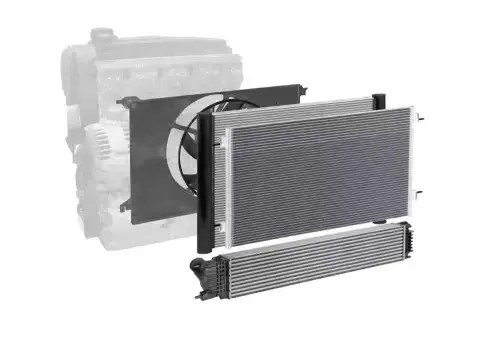
With increasingly strict environmental regulations, the design of a car’s cooling system plays a crucial role in fuel efficiency and emissions reduction. A highly efficient radiator not only keeps the engine operating at its optimal temperature but also helps reduce fuel consumption and lower exhaust emissions.
1. How Does Efficient Cooling Improve Fuel Economy?
When an engine runs at its ideal temperature, fuel combustion is more efficient, providing stable power output. If the radiator is inefficient and causes the engine to overheat or remain too cold, it can negatively impact fuel combustion, leading to increased fuel consumption. For example, an overly cold engine increases oil viscosity, causing higher internal friction, while an overheated engine may lead to premature fuel combustion, disrupting normal engine performance.
2. Lightweight Design and Environmental Benefits
Traditional copper radiators, while excellent in heat conduction, are heavy. Modern aluminum radiators are lighter, reducing the vehicle’s overall weight and improving fuel efficiency while lowering carbon emissions. Some high-end vehicles are now incorporating advanced materials like carbon fiber composites to further enhance radiator performance and sustainability.
3. Future Developments
As electric vehicles (EVs) become more popular, their thermal management systems are also evolving. Many EVs now use liquid-cooled radiators to maintain optimal battery and motor temperatures, improving battery longevity and energy efficiency. Future radiator technology will focus even more on energy efficiency and incorporate intelligent control systems to optimize energy consumption.